
Currently Browsing: Chinese
Posted on 7 March 2009 | 24 Comments

Stuffed gluten balls (酿面筋卜)
It has been a while since I featured the step-by-step instructions on “how to make a smooth & springy fish paste”, and only recently have I found the time to make them again. With a few batches of fish paste stored in my freezer, I started browsing thru my collection of cookbooks to look for new fish paste recipes. Among them is a recipe I had tried that ended up with the most satisfying results.
It...
Posted on 21 February 2009 | 19 Comments

Luo Han Zhai/ Loh Han Chai (罗汉斋)- 2
Luo Han Zhai*/ Loh Han Chai^ (braised mixed vegetables) is a popular home-cooked vegetarian dish during Chinese New Year. As it uses a lot of ingredients which require braising, the preparation is tedious and time-consuming. For the recipe, please refer to my earlier post.
(* – pronunciation in Mandarin / ^- pronunciation in Cantonese )
Although “lam yue” (南乳 fermented red beancurd)...
Posted on 18 February 2009 | 20 Comments

Braised taro with dried shrimps
Taro (芋头 , yu tou) is commonly used in Chinese cuisine for a variety of dishes ranging from main dish to dessert. Some of my favourite taro dishes are: braised pork with taro (芋头焖猪肉), taro/ yam rice (芋头饭), steamed taro cake (芋头糕), taro puffs (芋角) , taro nest/ yam ring (“fatt put”) and sweet taro puree with gingko nuts (白果芋泥). In my 1st attempt to cook...
Posted on 1 February 2009 | 55 Comments

Scrambled eggs w/ tomatoes (黄金满屋,鸿运当头)
Have you seen a TVB Hong Kong cooking show called “SO FAR 苏 GOOD”? It is hosted by Susie Wong (苏施王). I love watching her show as she is straight-to-point, sprinkled with lots of typical Hong Kong humour.
When I first chanced upon her show, she was teaching a group of newly wed couples (all inexperienced in cooking) on how to make the perfect scrambled eggs with tomatoes (蕃茄炒蛋)....
Posted on 20 January 2009 | 28 Comments

Braised dried oysters with minced meat
During Chinese New Year, the most popular dish in Cantonese’s cooking is braised dried oyster/ ho si (蚝豉) with black moss/ fat choy (发菜). Both of these ingredients sound auspicious in Cantonese’s pronunciation. Ho si means good business(好市)whereas fat choy means prosperous (发财). Besides braising, dried oysters can also be used in porridge and soup.
Today, I will share with...
Posted on 21 December 2008 | 28 Comments

Grandma’s pancakes (aka mommy’s pancakes)
During our childhood days, this pancake was made from the leftover batter used for french toast or pan-fried nian gao (Chinese New Year glutinous rice cake). It was always a hit in the family. Due to the limited supply, we always walloped the pancake first even though it was still hot from the pan.
Nowadays, it has become a hit to all my nieces and nephews too. For those who are staying overseas,...
Posted on 17 December 2008 | 20 Comments

Millet porridge
Porridge/ congee is a common substitute for rice among the Chinese. It is a preferred meal especially during hot weather or when a person’s body is heaty. It can be cooked in cooking pot, rice cooker, crock pot, slow cooker, claypot or pressured cooker. When my son was younger, I like to cook porridge using a slow-cooker. Although it took a longer time, the texture of the porridge is smoother and more...
Posted on 11 December 2008 | 16 Comments

Fen ge herbal soup (粉葛药材汤)
I first learned about 粉葛/葛根(Thomson’s kudzu/fen ge – as shown in picture below) from my mother-in-law. She used it to make soup for the family. At the first glance, it looked quite similar to 沙葛 (yam bean). 粉葛 has natural sweetness and brings many health benefits to women especially for the middle-aged group as mentioned in this link. There are many types of 粉葛 soup. The...
Posted on 1 December 2008 | 35 Comments
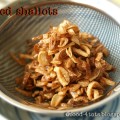
Fried shallots
Out of all the cooking methods, deep-frying is the least preferred cooking method for me. Why? Besides health reasons, I want to minimize my cleaning job. But this doesn’t mean I am totally rejecting deep-frying food. I don’t mind to eat it once in a while if it is done by others. Hehehe!
This fried shallot is the only deep-frying dish in my entire recipes. I made it on a weekly basis as I...
Posted on 26 November 2008 | 20 Comments
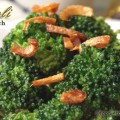
Broccoli – How to blanch
“What is your favourite vegetable?” “BROCCOLI!!”
That’s the immediate response I always get from my son. The strange thing is he enjoys eating broccoli using his fingers. Maybe it is really a “finger lickin’ good” vegetable!
When I first started to make my own baby food, I read about broccoli is one of the high-nitrate vegetables (besides beets, cabbage, carrots, celery,...


